How Many Solar Panels Do I Need? A Simple Way to Size Your System
Work out how many solar panels your home needs from your electricity bill, your roof, and your local sunlight, with a clear formula and worked examples.
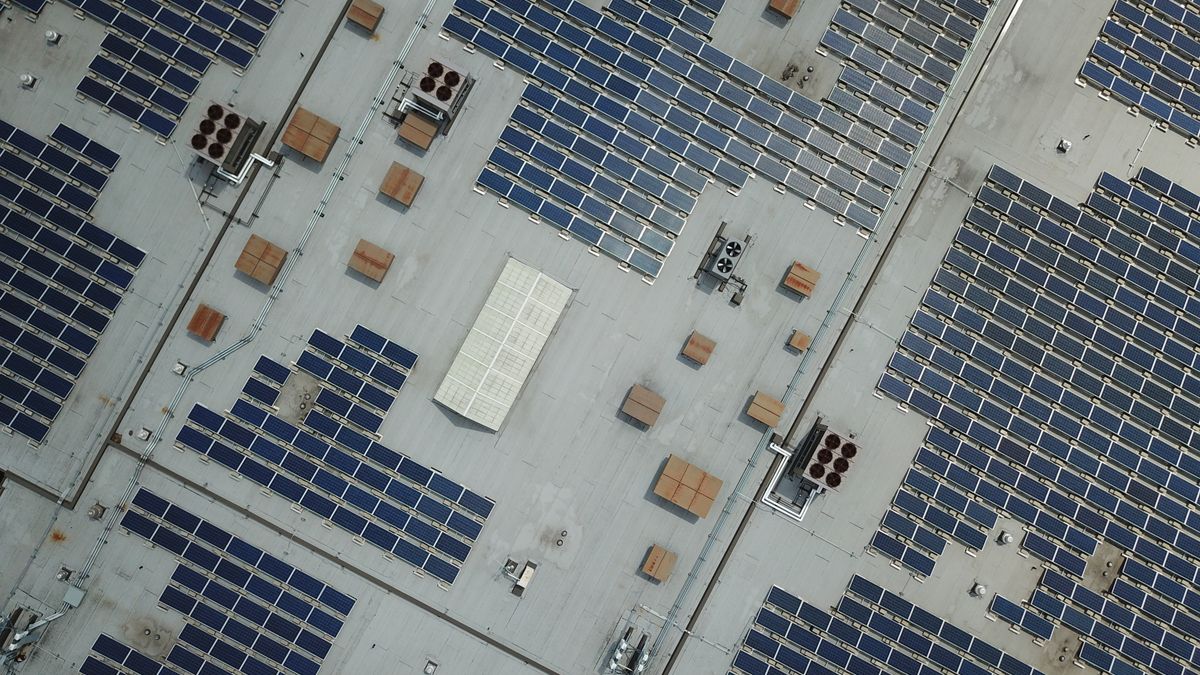
“How many panels do I need?” is usually the first real question people ask once they decide solar might be worth it. The honest answer is that it depends on three things: how much electricity you use, how much sun your roof gets, and how powerful the panels are. The good news is you can get a solid estimate yourself in about five minutes, without waiting for a salesperson.
The short formula
Here is the whole calculation in one line:
where yearly production per panel = panel wattage × peak sun hours per day × 365 ÷ 1000.
That looks like a lot, so let’s take it apart piece by piece.
Step 1: Find your yearly electricity use
Pull up your electricity bills and add up the kilowatt-hours (kWh) used over the last 12 months. Most bills show this figure clearly. If you only have one month handy, multiply it by 12, but a full year is better because it captures summer and winter swings.
A typical single-family home uses somewhere around 9,000 to 11,000 kWh per year, but yours could be far higher or lower. Use your real number, not an average.
Step 2: Find your peak sun hours
“Peak sun hours” is not the number of daylight hours. It is the number of hours per day that sunlight is strong enough to count as full power. It bundles cloudy mornings and strong afternoons into one useful daily figure.
Rough guide:
| Location type | Peak sun hours per day |
|---|---|
| Sunny (southwest US, southern Spain, most of Australia) | 5.5 to 6.5 |
| Moderate (much of the US, southern Europe) | 4 to 5 |
| Cloudier (UK, northern Europe, Pacific Northwest) | 2.5 to 3.5 |
If you want your exact figure, a local installer or a national solar resource can give you a precise number for your postcode.
Step 3: Pick a panel wattage
Modern residential panels are usually 400 to 450 watts each. We’ll use 400 W in the examples to keep the math clean and a little conservative.
Step 4: Put it together (worked example)
Say you use 10,000 kWh per year, you get 4.5 peak sun hours per day, and you choose 400 W panels.
First, yearly production per panel:
- 400 W × 4.5 hours × 365 days = 657,000 watt-hours
- ÷ 1000 = 657 kWh per panel per year
Then panels needed:
- 10,000 ÷ 657 = about 15 to 16 panels
At 400 W each, 16 panels is a 6.4 kW system, which is a very normal size for a home like this.
A faster shortcut
If the formula feels like too much, there is a rougher rule of thumb: for a moderate-sun location, you need roughly 1 kW of panels for every 1,200 to 1,500 kWh you use per year. So 10,000 kWh divided by around 1,350 lands you near a 7 kW system, in the same ballpark as the detailed math above.
Don’t forget the roof reality check
The math tells you how many panels you want. Your roof decides how many you can fit. A few things to keep in mind:
- Each panel takes up roughly 18 to 20 square feet (about 1.7 to 1.9 square metres).
- Shading from trees or chimneys, an awkward roof shape, or a north-facing slope can all cut into usable space.
- If your roof can’t fit enough panels to cover 100% of your use, that’s fine. Many people cover 70 to 90% of their bill and still come out well ahead.
Should you size for 100% of your bill?
Not always. A few reasons you might size smaller or larger:
- Net metering rules. If your utility pays little for exported power, oversizing to sell surplus makes less sense.
- Future use. Planning an EV or a heat pump? It can be worth sizing up now.
- Budget. A smaller system that covers most of your bill still has strong economics and a shorter payback.
Let the calculator do it for you
The formula above is exactly the kind of thing our free tool automates.
Bottom line
To size a solar system, divide your yearly electricity use by how much one panel produces where you live. For a typical home that lands around 15 to 20 panels, or roughly a 6 to 8 kW system, but your bill, your sun, and your roof set the real number. Start with your own kWh figure and the rest follows. For the money side, read how much solar panels actually cost.
Production estimates vary with weather, roof angle, and shading. Treat these numbers as a starting point and confirm with a local installer before buying.