How Do Solar Panels Work? A Clear, Complete Explanation
A plain-English walkthrough of how solar panels turn sunlight into electricity you can use at home, from the silicon cell to your wall socket and the grid.
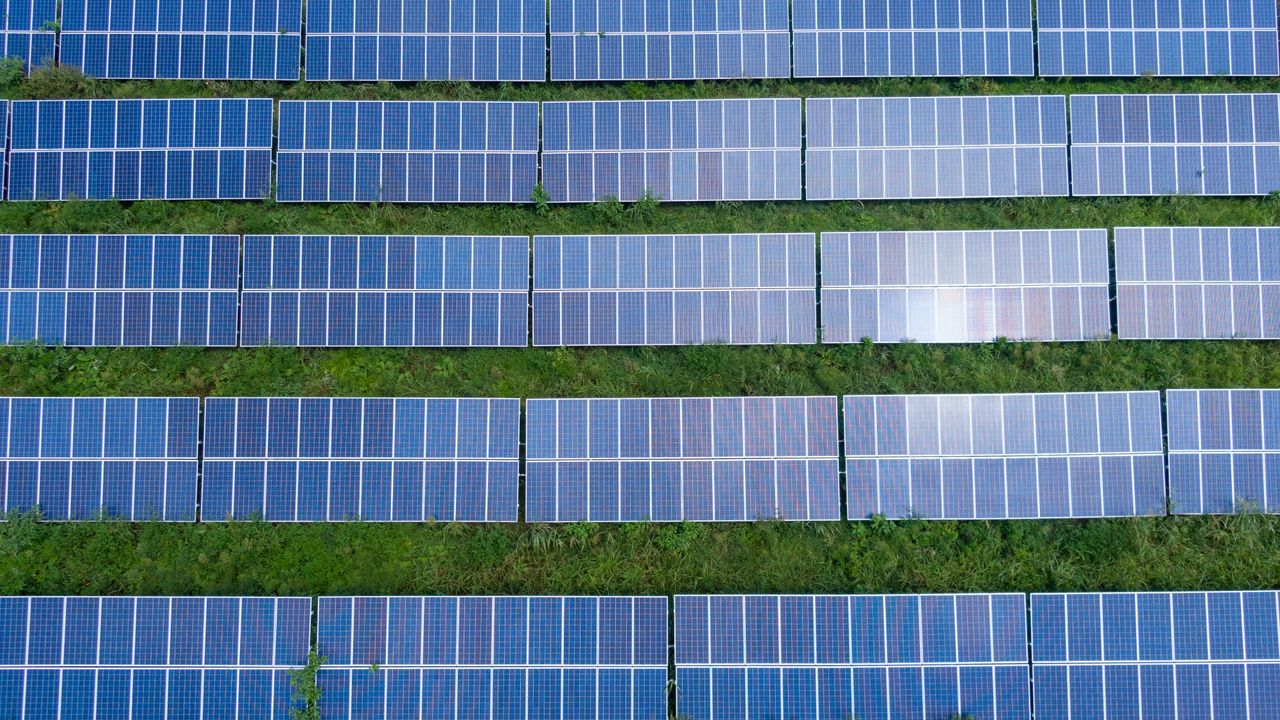
Solar panels feel almost magical: put a dark rectangle on your roof, and it quietly produces electricity for decades with no moving parts. But there’s no magic here, just some clever physics and a few pieces of hardware working together. Here’s the whole story, step by step, in plain English.
The one-sentence version
Solar panels work by letting sunlight knock electrons loose inside silicon, which creates a flow of electricity that gets converted into the type of power your home uses.
That’s the summary. Now let’s actually understand it, because the details are what help you make smart decisions about buying a system.
Step 1: Sunlight hits the solar cell
A solar panel is made of many solar cells, and each cell is mostly a thin wafer of silicon, the same element found in sand. Silicon is a semiconductor, which means it normally doesn’t conduct electricity well, but can be made to under the right conditions.
To create those conditions, manufacturers “dope” the silicon: they add tiny amounts of other elements to create two layers.
- The top layer is treated to have extra electrons (a negative, or “n-type” layer).
- The bottom layer is treated to have fewer electrons, spaces called “holes” (a positive, or “p-type” layer).
Where these two layers meet, they form what’s called a p-n junction, and this junction is the heart of how a solar panel works.
Step 2: The photovoltaic effect (the actual “magic”)
Sunlight is made of tiny packets of energy called photons. When a photon strikes the silicon, it can transfer its energy to an electron and knock it loose from its atom.
Normally that electron would just settle back down. But the electric field at the p-n junction acts like a one-way slope: it pushes the freed electrons in a single direction. Instead of drifting randomly, the electrons all flow the same way, and a flow of electrons is exactly what electricity is.
This process, where light frees electrons to create a current, is called the photovoltaic effect. It’s why solar panels are often called “PV panels.”
Step 3: Metal contacts collect the current
Thin metal lines printed across each cell (you can see them as the fine grid pattern on a panel) collect these flowing electrons and channel them out of the cell as an electric current. Cells are wired together in a panel, and panels are wired together into an array to build up a useful amount of power.
Step 4: The inverter converts the power
Here’s a catch: solar cells produce direct current (DC), electricity that flows in one constant direction. But your home, your appliances, and the grid all run on alternating current (AC).
So the electricity flows to an inverter, the second most important component after the panels themselves. The inverter’s job is to convert DC into AC that matches your home’s voltage and the grid’s frequency. There are a few types:
- String inverters: one central inverter for the whole system. Affordable and common.
- Microinverters: a small inverter on each panel. Costs more, but one shaded or underperforming panel won’t drag down the rest.
- Hybrid inverters: can also manage a battery.
Step 5: The electricity powers your home
Once converted to AC, the electricity flows to your home’s electrical panel and powers whatever is running: lights, fridge, air conditioning, just like power from the grid. Your home automatically uses the free solar power first.
Step 6: Extra power goes to the grid (or a battery)
During the day, panels often produce more than you’re using. That surplus has somewhere to go:
- Back to the grid. In many places, your meter runs backward or you earn credits, a system called net metering. At night, you draw normal grid power, offset by the credits you built up during the day.
- Into a battery. If you have home storage, the excess charges the battery so you can use that solar energy after dark or during an outage. (Whether a battery is worth the cost is a separate question, see our honest look at solar batteries.)
This is why most grid-connected homes with solar still have an electricity bill connection: the grid acts like a giant backup battery.
What happens at night or when it’s cloudy?
- At night: panels produce nothing, so your home draws from the grid (or your battery). This is normal and expected.
- Cloudy days: panels still work, just at reduced output, often 10 to 25% of peak, depending on how heavy the cloud is. They rely on daylight, not direct beams only.
The main parts of a solar system, recapped
| Component | Job |
|---|---|
| Solar panels (PV modules) | Turn sunlight into DC electricity |
| Inverter | Convert DC into usable AC electricity |
| Mounting/racking | Hold panels at the right angle |
| Meter | Track energy sent to and drawn from the grid |
| Battery (optional) | Store surplus energy for later |
Do solar panels wear out?
They degrade slowly, typically losing around 0.5% of output per year. After 25 years, a panel usually still produces around 85 to 90% of its original power. That’s why most panels carry a 25-year performance warranty. There are no moving parts, so maintenance is minimal, mostly keeping them reasonably clean. For the full picture, see how long solar panels last.
So, is it worth putting them on your roof?
Understanding how solar works is the first step. Whether it makes financial sense for you depends on your electricity bill, your local sunlight, and system prices. The fastest way to find out is to run your own numbers:
And if you want the money side in detail, read our plain-English breakdown of how much solar panels actually cost.
Bottom line
Solar panels use the photovoltaic effect to knock electrons loose in silicon, creating direct current. An inverter turns that into the alternating current your home uses, and any surplus flows to the grid or a battery. No moving parts, no fuel, decades of quiet operation: that’s the whole trick.